

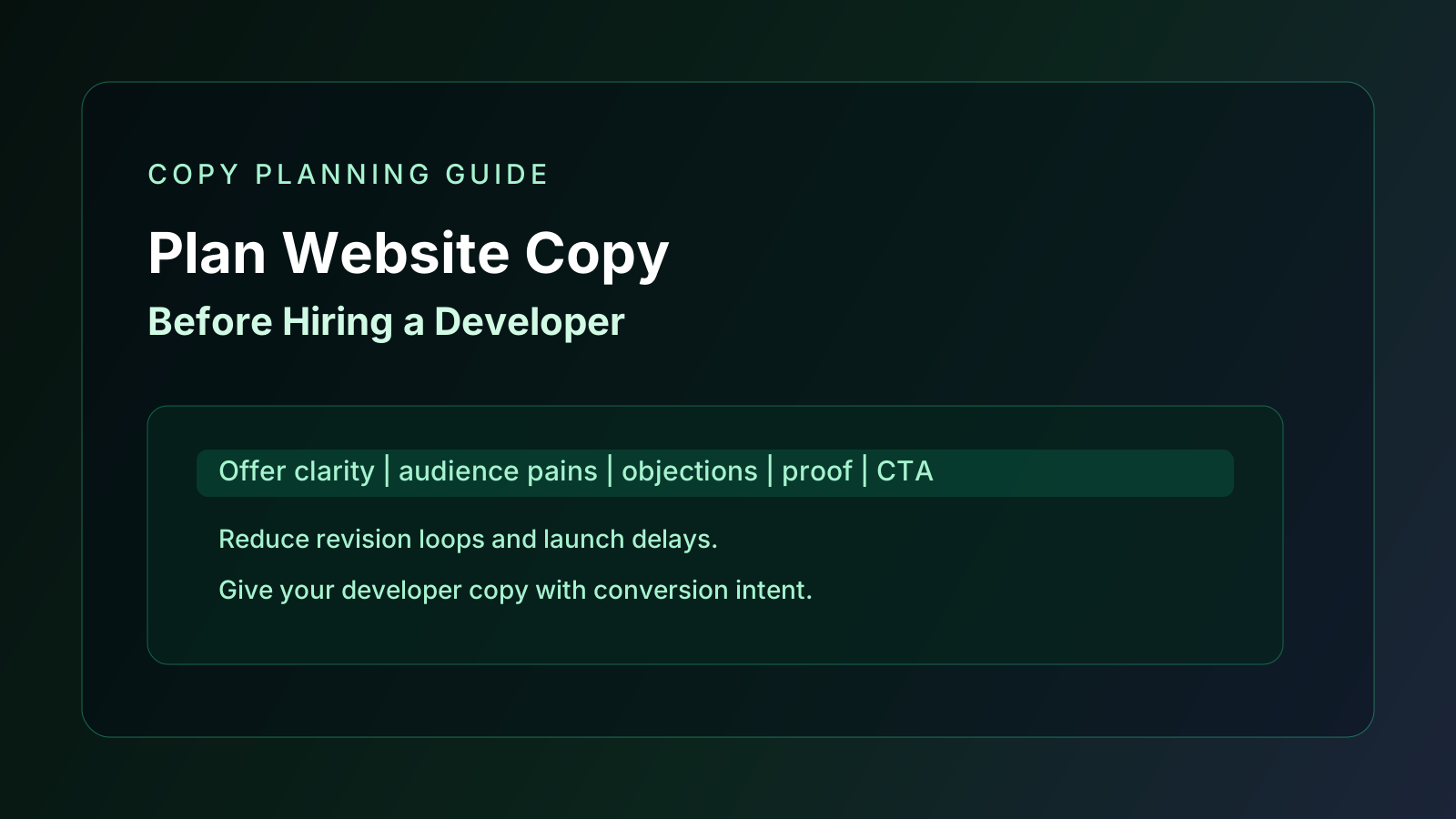
How to Plan Website Copy Before Hiring a Developer
A practical planning framework for writing or organizing website copy before development starts.
Article History
Published: April 7, 2026
Updated: April 7, 2026
Reviewed: April 7, 2026
Author

Victor Chinukwue
Founder, Web Growth
Founder-led strategist and developer focused on high-performance websites, conversion systems, and practical growth execution for service and ecommerce businesses.
- Next.js web architecture
- Conversion-focused website strategy
- Technical SEO foundations
- Website performance optimization
- Service-business growth systems
Reviewed By
Web Growth Editorial
Editorial Review Team
Editorial Note
Based on recurring delays caused by weak copy preparation before build kickoff.
Framework prioritizes speed, clarity, and conversion alignment.
Key Takeaways
- Clear copy inputs reduce redesign delays and dev rework.
- Copy should map to conversion flow, not random sections.
- You do not need perfect copy before kickoff, but you need structured direction.
What You Will Need
- Core offer summary.
- Target audience and objections list.
- Proof assets and CTA preference.
Common Mistakes
- Starting build with no offer clarity.
- Writing generic copy that could fit any competitor.
- Ignoring objection handling until late-stage revisions.
Process Steps
- 1Define offer and audience in one-page brief.
- 2Map copy by section purpose (trust, clarity, action).
- 3Prepare proof and FAQ inputs before development.
How to Plan Website Copy Before Hiring a Developer
Copy planning is one of the biggest launch-speed multipliers.
When copy is vague, development slows down, revision cycles increase, and conversion quality drops.
1) Start with a one-page offer brief
Answer these questions first:
- what do you do?
- who is it for?
- what outcome do they want?
- why should they trust you?
- what should they do next?
If this brief is unclear, your website usually becomes generic.
2) Map copy by section purpose
Each section should have one job:
- hero: clarity and direction
- trust: proof and risk reduction
- process: confidence in delivery
- FAQ: objection handling
- CTA: action
Avoid long paragraphs trying to do everything at once.
3) Prepare proof assets before design phase
Gather these early:
- testimonials with full names or business types
- project examples
- certifications or credentials
- concrete deliverables and exclusions
Specific proof makes copy persuasive without hype.
4) Build your objection list
Write the top concerns buyers ask before contacting you:
- timeline
- price range
- fit and scope
- support after launch
Turn each concern into short FAQ copy. This improves conversion and reduces back-and-forth in sales calls.
5) Decide your CTA strategy early
Choose one primary conversion action per page:
- call
- booking link
- inquiry form
Then write copy that supports that action. Mixed CTA intent creates friction.
Simple website copy brief template
Use this template for each page:
- 1Page goal
- 2Primary audience
- 3Core message
- 4Proof points
- 5Objections
- 6Primary CTA
A developer can build faster when this is ready.
Related guides and implementation support
- Homepage Structure That Converts Visitors Into Enquiries
- Landing Page Wireframe for a Local Service Business
- Website Redesign service
Minimum copy pack you should have before development
At minimum, prepare these page drafts:
- homepage
- primary service page
- about or trust page
- contact page
For each page, include:
- target audience
- page goal
- core message
- proof points
- CTA text
This level of copy preparation usually cuts revision loops and protects launch timelines.
SEO placement basics for your first copy draft
For each page draft, include:
- one primary keyword phrase in heading
- one supporting phrase in a subheading
- natural keyword usage in body copy
- internal links to related pages
Do not over-optimize wording. Useful, specific copy performs better than forced keyword repetition.
Final note
Great websites are usually clear before they are beautiful.
Plan copy first, and your design and development process becomes faster, cheaper, and more conversion-focused.
FAQ
How to Plan Website Copy Before Hiring a Developer FAQ
Short answers to common planning and implementation questions.
No, but you need structured draft inputs and clear messaging priorities.
Developers can guide structure, but business context and offer detail should come from you.
Related Guides
Landing Pages
Landing Page Wireframe for a Local Service Business
A practical wireframe structure local service businesses can use to turn ad clicks and referrals into calls and quote requests.
12 min read
Website Strategy
Homepage Structure for Service Businesses: The 7 Sections That Turn Visits Into Enquiries
A homepage should not try to say everything. It should make the offer clear, reduce risk fast, and move the right visitor to one next step.
13 min read
Website Launch
Website Launch Checklist for Small Businesses (Avoid Expensive Mistakes on Day One)
Launch day should not be chaos. Use this practical checklist to ship a fast, credible, conversion-ready website that actually generates enquiries.
16 min read
Platform Selection
Website Platform Comparison for Small Businesses
A practical comparison of common website platform options so small businesses can choose based on growth stage and technical needs.
13 min read
Internal Resource
Need implementation support for this guide?
If you want this executed with senior-level speed and quality control, request a scoped recommendation.
Request Implementation Scope