

Case Study: Rebuilding J Luxe Medical Aesthetics for Trust, Clarity, and a Stronger London Presence
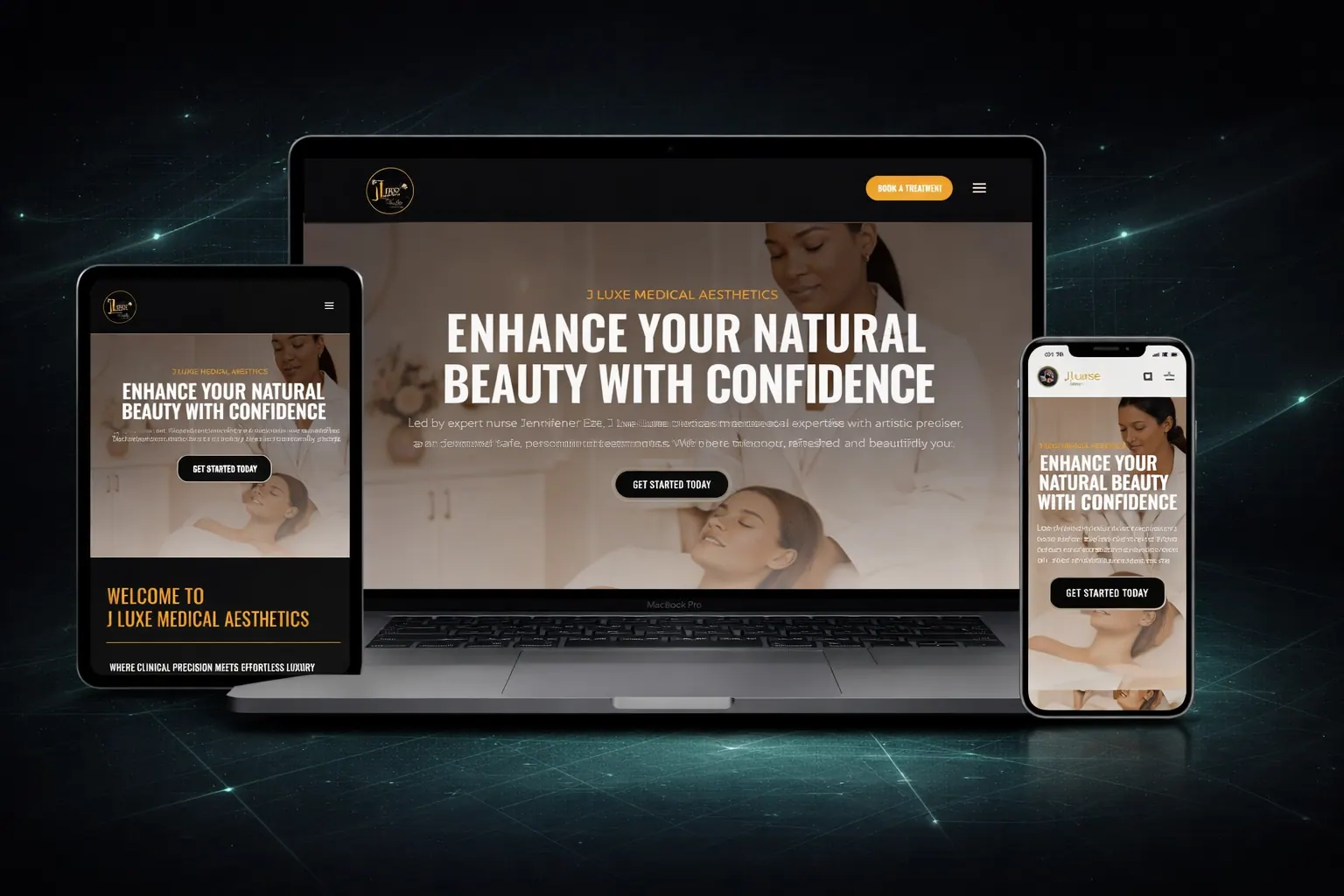
A practical case study on rebuilding the J Luxe Medical Aesthetics website for a London clinic that needed a more premium first impression, clearer treatment pages, and a better path to enquiry.
Our articles are written and reviewed in-house using real website launch, redesign, technical SEO, and conversion work. We update posts when our process changes, and we keep the advice aligned with what we actually implement for businesses in Nigeria and remote international markets.
Case Study: Rebuilding J Luxe Medical Aesthetics for Trust, Clarity, and a Stronger London Presence
J Luxe Medical Aesthetics is a London clinic serving a market where trust matters immediately.
When someone is considering a treatment, the website does not just need to look clean. It needs to feel credible, calm, premium, and easy to understand. If the website feels generic, slow, or vague, that hesitation shows up before a booking ever happens.
That was the core problem this rebuild was designed to fix.
Need website design in 48 hours?
If you need a professional website live fast for Nigeria-based or international clients, the launch offer is built for that exact use case.
Explore the full service at website design in 48 hours, see how to launch your website in 48 hours, or review the done-for-you website launch details.
Live site: J Luxe Medical Aesthetics
Project summary
This was a website rebuild for a medical aesthetics clinic in Hackney, London.
The main goals were:
- improve the first impression
- make treatments easier to understand
- build stronger trust on mobile
- support local service visibility with cleaner structure
- give visitors a clearer path to contact or book
This was not a simple visual refresh project. It was a trust and clarity project first.
What needed fixing
The biggest weaknesses were typical of many service-business websites:
- the site did not feel premium enough for the service level
- treatment information needed stronger structure
- the trust layer was not strong enough early in the visit
- mobile experience needed to feel cleaner and more deliberate
- the website needed a better foundation for local search and service-page targeting
In a clinic market, those problems matter because buyers are not making casual decisions. They are comparing credibility as much as they are comparing services.
What changed in the rebuild
The rebuild focused on four areas.
1. Clearer premium positioning
The site was rebuilt to feel more considered and more aligned with a premium clinic experience.
That meant:
- stronger visual hierarchy
- cleaner spacing
- more controlled typography
- a calmer, more confident first screen
The goal was not visual noise. The goal was to make the clinic feel more trustworthy at first glance.
2. Better treatment-page clarity
A clinic website should not force visitors to piece the service together from scattered blocks.
The rebuild focused on clearer treatment presentation so visitors could understand:
- what the clinic offers
- where specific treatments fit
- why the clinic feels credible
- what the next step should be
That kind of clarity matters because uncertainty kills action.
3. Stronger trust signals
For a clinic, trust cannot sit at the bottom of the page.
The rebuild pulled trust forward through:
- stronger service presentation
- cleaner proof structure
- a more serious visual tone
- a more deliberate path to contact or booking
The site now feels more like a real clinic brand and less like a generic template.
4. Cleaner technical and search foundation
The site was also rebuilt to support a stronger local and service-page structure.
That included:
- cleaner page targeting
- metadata and structure that better support local relevance
- a foundation that is easier to extend with service-led SEO work later
This matters because a clinic website should support visibility and conversion together, not treat them as separate jobs.
What the finished site does better
The strongest visible improvements are practical:
- the clinic feels more premium
- the service offering is easier to understand
- the site feels more controlled on mobile
- the enquiry path is clearer
- the website is better aligned with London clinic expectations
That is the real value of the rebuild. A stronger first impression. Less hesitation. A clearer path to action.
The implementation approach
The rebuild used a modern front-end setup that gave more control over:
- layout quality
- performance discipline
- image handling
- page structure
- reusable sections
That allowed the website to feel more intentional without slipping into the usual template clutter or plugin-heavy experience that weakens a lot of small business sites.
Where this approach fits best
This kind of rebuild is a strong fit for:
- clinics
- consultants
- specialists
- service businesses with premium positioning
- businesses that already have demand but lose trust online
It is especially useful when the current site looks acceptable on the surface but still feels too generic to support serious enquiries.
Final takeaway
The J Luxe rebuild is a good example of what happens when a service-business website is treated like a commercial asset instead of a brochure.
The improvements were not about adding more sections or more effects.
They were about getting the right fundamentals right:
- clearer positioning
- stronger trust
- better mobile experience
- cleaner service structure
- a more obvious next step
If your website already gets attention but still feels too weak to support real enquiries, this is the kind of problem a rebuild should solve.
If you want a website rebuilt around trust, clarity, and conversion instead of filler, start here: Request a Quote
Ready to launch
Launch your website in 48 hours with a done-for-you setup
If this article helped you clarify the next step, the launch offer gives you a mobile-first business website, domain guidance, hosting setup, and a clear CTA flow without dragging the project out.
Chat on WhatsAppWebsite design in 48 hours for businesses that need to go live fast
The 48-hour launch offer is built for businesses that need a clean, mobile-first site live fast with pricing, CTA flow, and basic SEO already handled.
See the done-for-you website launchHosting Support
Need reliable hosting before you build?
Use the hosting offer to start with a cleaner setup and a lower upfront cost.
Related posts
More articles to help you get better rankings and more leads.
An 8-part series on rebuilding jluxemedicalaesthetics.com, covering SEO migration, service page conversion, launch strategy, and Next.js architecture decisions.
Part 4 of the J Luxe rebuild series: how to write service pages that rank in local SEO and convert visitors into qualified enquiries using a practical, repeatable framework.
Part 2 of the J Luxe rebuild series: how a structured website audit, technical SEO audit, and conversion audit created a clear rebuild roadmap without wasted redesign work.